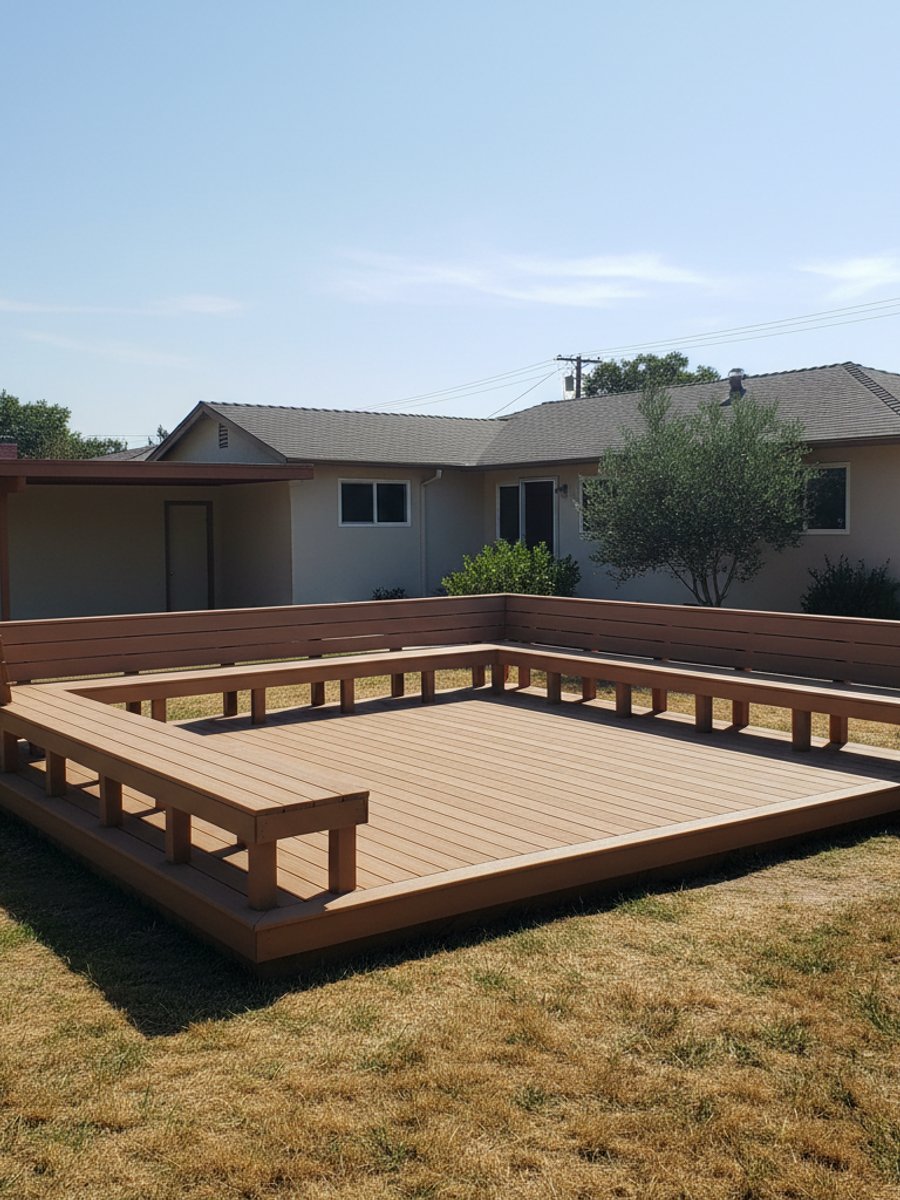
Riverside has a lot of decks that were never permitted, framed with the wrong hardware, or bolted to a ledger board that's been rotting behind the stucco for ten years. None of that shows up until someone's standing on it during a barbecue. Picking a builder here isn't about finding the cheapest bid. It's about finding someone who understands what our clay soil, our heat, and our building department actually require, and who will tell you the truth even when it costs them the job.
License and insurance, and what that number actually means
A deck builder working in California needs a contractor's license, usually a B (general building) or C-6 (carpentry) classification through the Contractors State License Board. Ask for the number and look it up yourself, it takes two minutes and tells you if it's active, what class it is, and whether there are complaints on file. Then ask for proof of general liability insurance and workers' comp. If a crew gets hurt on your property and the outfit doesn't carry comp, you can end up covering the medical bill through your homeowner's policy. Anyone who gets cagey about either of these is telling you something.
Why the ground here matters more than people think
A lot of Riverside sits on clay that swells when it's wet and shrinks hard when it dries out, especially in the older flatland neighborhoods away from the river. That movement is slow but it's real, and it's why deck footings poured too shallow start to heave or tilt within a few years. Most residential deck footings around here run 12 to 18 inches deep with a concrete pier below the frost-free grade, but on expansive clay a good builder will size that footing to the load and sometimes go deeper or wider rather than use a one-size number off a chart. Up toward the foothills near Box Springs or La Sierra you're more likely to hit decomposed granite and rock, which is a different digging problem but a more stable base once you're through it. Either way, someone should be able to tell you what they're pouring into and why, not just how many footings the deck needs.
Subterranean termites are common through the Inland Empire, and a deck ledger bolted to a house without the right flashing gives them a path straight into the rim joist. If a builder isn't talking about flashing where the deck meets the house, ask why.
Permits, inspections, and HOAs
In the City of Riverside, an attached deck or one that sits higher than about 30 inches off grade needs a building permit, and the plans get checked against setback requirements before anything gets dug. There's usually a footing inspection before concrete gets poured and a framing inspection before the decking goes down, plus a final once the guardrail and stairs are in. Guardrails have to be 42 inches high with balusters spaced so a 4-inch sphere can't pass through, that's state code, not a builder's preference. If you're in unincorporated county land instead of the city proper, it runs through Riverside County instead, but the inspection steps are similar. A licensed builder pulls this permit as a matter of course. If someone tells you the permit isn't necessary or that it'll just slow things down, that's your answer to move on.
Newer subdivisions like Orangecrest or Mission Grove usually have an HOA with a design review step before the city permit even gets submitted, sometimes requiring specific railing styles or setbacks from the property line. Older streets in the Wood Streets or Arlington Heights areas skip the HOA step but come with their own issue, houses built from the 1920s through the 1950s often have wall framing or siding that needs to be opened up and checked before a ledger board goes on it. A contractor who's worked both kinds of neighborhoods should recognize the difference without you having to explain it.
What a real bid actually spells out
A written estimate should name the footing depth and spacing, the framing lumber grade, the fastener type (galvanized or stainless, not whatever nails were in the truck), and the decking material by brand and profile if it's composite. It should say how the ledger will be flashed and bolted, and it should mention drainage, whether that's a simple slope away from the house or a full under-deck waterproofing system if there's living space below. Riverside gets most of its rain in a short window from January through March, sometimes in a few heavy storms rather than a steady drizzle, and a deck without a real drainage plan will show it the first wet winter.
On materials, redwood and cedar still look good going up but our summer sun is hard on them, boards can check and gray out within a couple of years without regular staining, and 100-plus degree days in July and August dry sealant out faster than it would in a milder climate. Capped composite decking holds color longer and doesn't need refinishing, but the cheaper uncapped composites can fade and even get too hot to stand on barefoot at midday. A builder should be able to talk through that tradeoff instead of just pushing whatever they have a supplier deal on.
Red flags that mean you walk
- Asks for full payment up front, before any material is delivered or footings are dug.
- Won't give you a license number, or the number doesn't match the name on the contract.
- Tells you a permit isn't needed for a deck attached to the house or over 30 inches high.
- Bid has no mention of footing depth, ledger flashing, or fastener type.
- Everything is verbal, nothing in writing beyond a price.
- Pressures you to sign the same day the estimate is given.
A deck is a structure holding people up over open air, sometimes twenty feet off a sloped backyard. It's worth the extra week it takes to check a license number and read a bid line by line. We do the licensing, the permit filing, and the framing to code on every job we take on, and if you want to see how we scope a project before you commit to anything, our deck builder work in Riverside is a good place to start.