Every job below is one we do ourselves across Riverside.
We build the frame first and get that right before a single board of decking goes down. Ledger board bolted to the rim joist with flashing tape behind it, footings poured below grade, joist hangers galvanized to match treated lumber. Get the substructure wrong and everything on top of it fails early no matter what decking you chose.
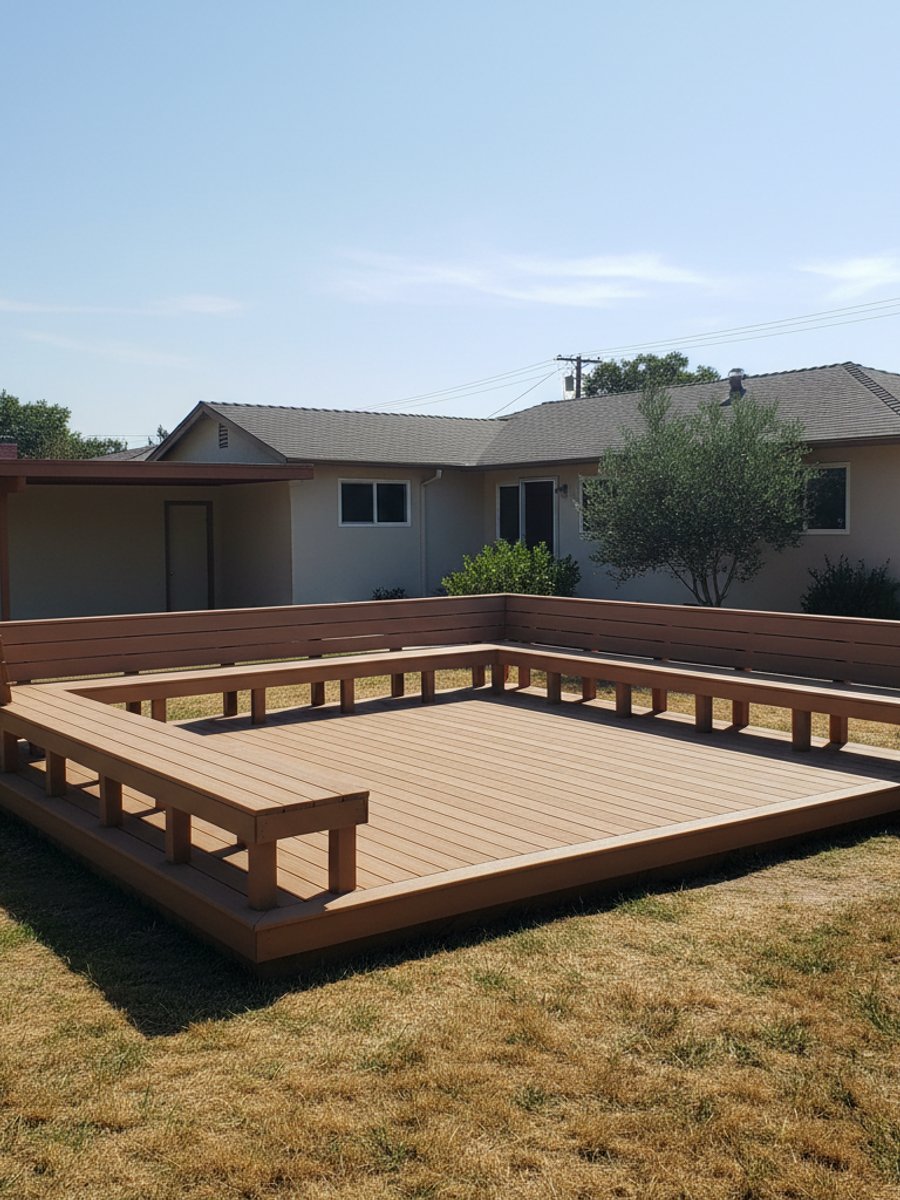
Some lots slope, some decks need to wrap around a pool equipment pad, some homeowners want built-in bench seating instead of railing on one side. We draw it out, figure the beam spans and post spacing before we touch a shovel, and walk you through the layout so there's no surprise once framing starts.
Soft spots in the decking, a railing that wiggles when you lean on it, joist hangers rusted through where two treated woods met without separation. We pull the bad boards, sister a joist if it's split, replace hangers with stainless where the old ones corroded. Most repairs don't require a permit, but if we find rot at the ledger board we'll tell you before we patch over it.
Riverside sun bleaches and dries out wood fast, and an unsealed deck starts checking and cupping within a couple of summers. We pressure wash first, let it dry a full day or two depending on humidity, then apply a penetrating stain or sealer built for UV. Composite doesn't take stain, but the fasteners and railing caps often still do.
Composite costs more up front and moves differently than wood, expanding and contracting with heat more than people expect in a hot valley climate. We leave the gap spec the manufacturer calls for at every board end and around posts, and use hidden fastener clips so there's no screw heads to catch a bare foot on. It won't rot or splinter, but the frame under it still has to be built like a wood deck would be.
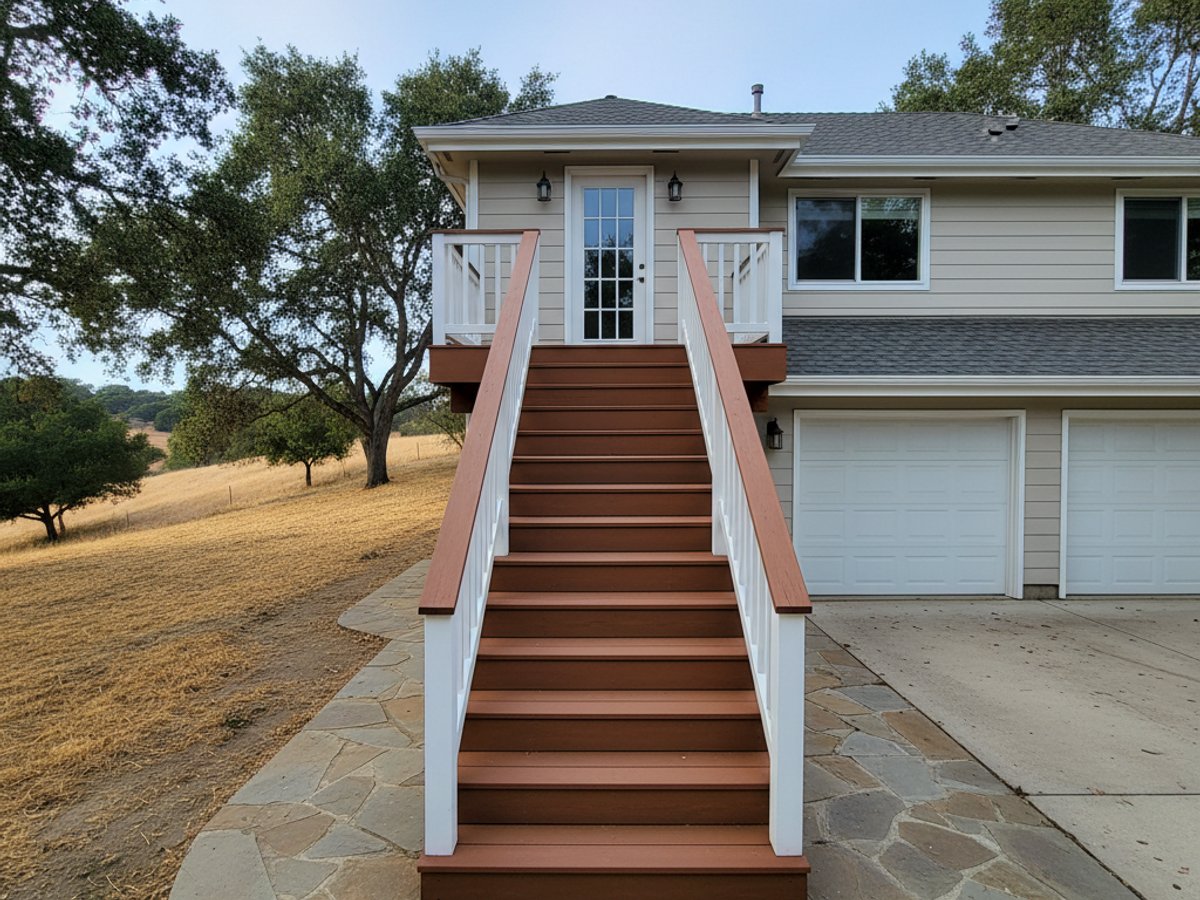
Code wants 36 to 42 inches of height depending on the deck and a 4-inch rule on baluster spacing so a small kid can't get through. We reset posts that have gone loose at the base, replace balusters that split, and rebuild rail sections that don't meet code if a home inspection flagged them. Cable rail and horizontal wood look good but need tighter post spacing to stay rigid, we size that before ordering material.
If the frame underneath is solid but the decking is worn, cupped or splintering, we can strip the boards down to the joists and start fresh without touching the substructure. It's faster than a full rebuild and a lot cheaper. Every joist gets checked while it's exposed anyway, since that's the one time it's visible without pulling more boards.
Old decks come down before new material goes in, and the debris gets hauled away instead of left in the yard. Buried footings and old post holes get checked at the same time, because reusing a bad footing location just repeats whatever problem took the old deck down.
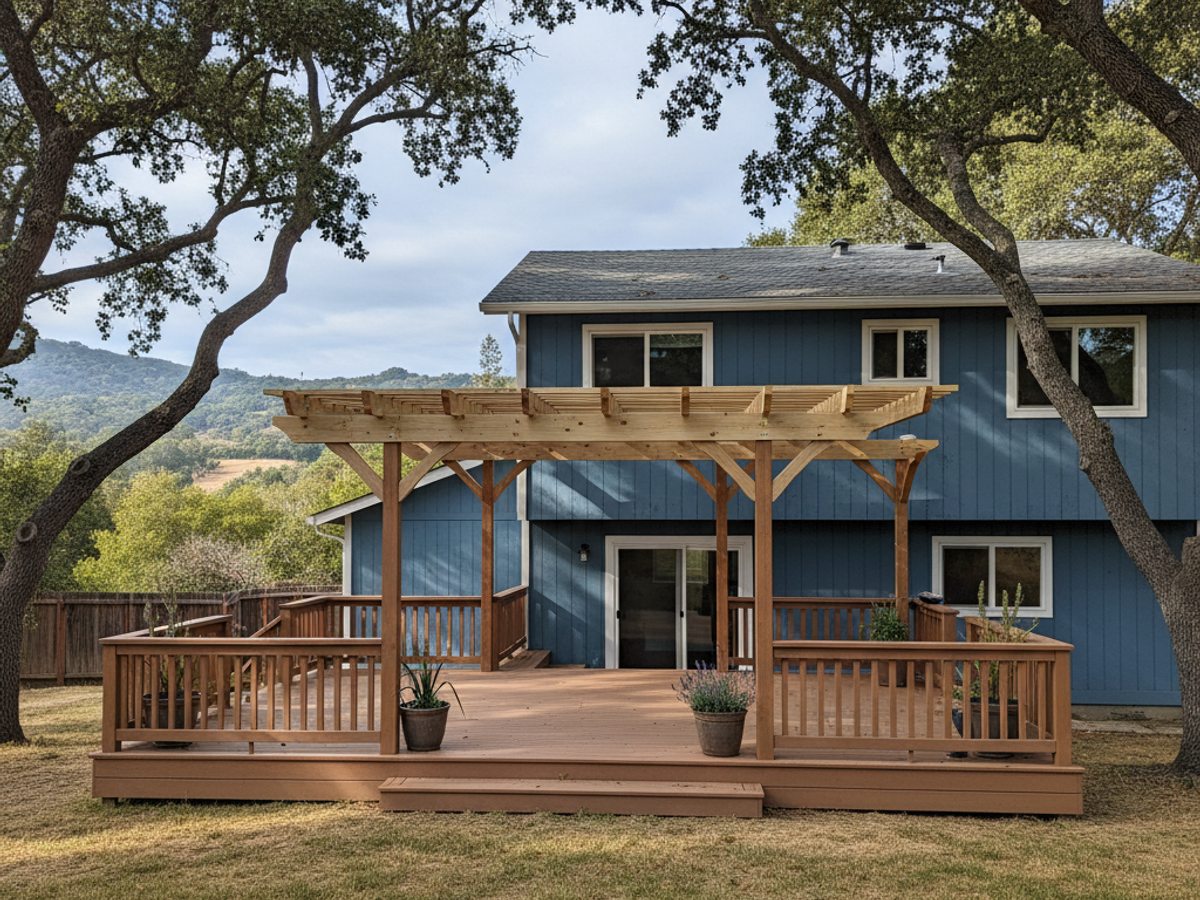
Riverside summers get past 100 degrees, and a deck without any shade sits empty most of July and August. Pergolas get framed off the deck posts where the structure allows it, or set on new footings if it doesn't. Louvered and fixed-slat both work, the difference is mostly cost and how much shade you actually want.
Water sitting under a deck rots the framing from underneath where nobody sees it until a joist gives. Under-deck drainage systems catch runoff between the boards and channel it to a downspout, which also opens up a dry space to use underneath. On ground-level decks, grading and gravel keep water from pooling at the posts.
Four steps, and no surprises in any of them.
You tell us what you want doing, we look at what is actually there, and we ask the awkward questions early.
In writing, itemised, free. If something might add cost later we flag it now rather than at the end.
Same crew throughout. We cover your floors, keep the dust down and tidy up before we leave each day.
You point out anything you are not happy with and we fix it before the invoice, not after.
Deck work happens across the Inland Empire, not just inside Riverside city limits.
Questions that come up once a deck project is actually underway.
Describe the problem and we will tell you what it probably is. No obligation.